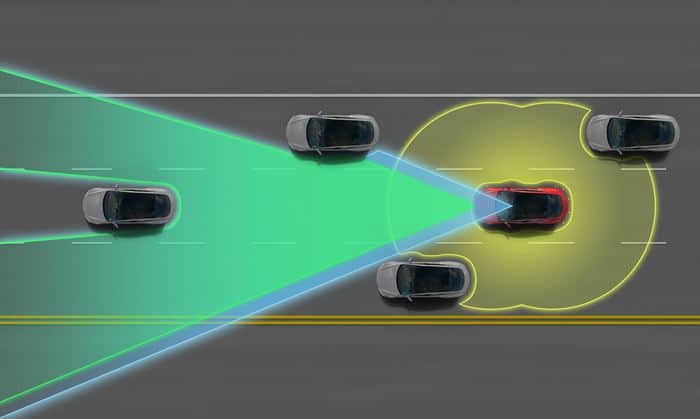
Many new cars can now steer, accelerate, brake and keep themselves centered in a lane for long stretches of a drive. Some can change lanes or follow a navigation route. A growing number let you take your hands off the wheel on approved highways.
Most people call these systems Autopilot, even though Tesla is the only major automaker that uses Autopilot as a product name. The industry calls them advanced driver-assistance systems, or ADAS. We use Autopilot throughout this article because that is the word drivers use when they compare cars.
Whether a car “has Autopilot” matters less than what the system can actually do: where it works, whether you can take your hands off the wheel, and how closely you still need to supervise it.
This guide compares the leading cars with Autopilot features sold in the U.S. in 2026, including Tesla FSD (Supervised), GM Super Cruise, Ford and Lincoln BlueCruise, BMW Highway Assistant, Rivian Autonomy+, Nissan ProPILOT Assist 2.1, Hyundai, Kia and Genesis Highway Driving Assist, Mercedes-Benz DRIVE PILOT and others.
Self-Driving Car Levels: A Brief Overview
Autopilot systems can look alike from the driver’s seat while placing very different responsibilities on the driver. A hands-free system, for example, is not a self-driving system. Almost every hands-free system sold today is still Level 2, which means you must watch the road continuously and be ready to take over.
| Level | What the system does | Your responsibility |
|---|---|---|
| Level 0 | Warnings or brief interventions only | You do all the driving |
| Level 1 | Steering assistance or speed control | You drive and supervise |
| Level 2 | Steering and speed control together | You supervise continuously and take over when needed |
| Level 3 | Drives itself under specific conditions | You may stop watching the road while it is active, but must take over when asked |
| Level 4 | Drives without human supervision inside defined conditions | No takeover needed within those conditions |
| Level 5 | Drives anywhere a human could | No human driver required |
Nearly every consumer Autopilot system in 2026 is Level 2. Some require your hands on the wheel; others allow hands-free driving on approved roads. The one exception in this article is Mercedes-Benz DRIVE PILOT, which provides Level 3 operation under tightly limited conditions.
Learn more in our guide to SAE self-driving levels for cars and autonomous vehicles. The levels come from SAE J3016, the standard NHTSA also uses.
Autopilot Definition
For this article, Autopilot means any system that combines adaptive cruise control with sustained steering or lane centering. That matches how most drivers use the word, even though manufacturers sell the same idea under names like Super Cruise, BlueCruise, Highway Assistant, ProPILOT Assist, Pilot Assist, Highway Driving Assist and DreamDrive.
There are now four distinct kinds of Autopilot system:
- Hands-on Level 2: the car steers and controls speed, but you keep your hands on the wheel.
- Hands-free Level 2: the car steers and controls speed without steering-wheel contact on approved roads, and a camera checks that you keep watching the road.
- Broader supervised driving: Tesla FSD (Supervised) assists on city streets as well as highways, but still needs your continuous supervision.
- Level 3 conditional automation: Mercedes-Benz DRIVE PILOT lets you stop watching the road, but only under narrowly defined conditions.
Knowing which of the four you are looking at tells you more than the brand name does.
Core Autopilot Features
At a minimum, a useful Autopilot system combines adaptive cruise control with sustained lane centering. The features below are what separate a good system from a feature-list checkbox.
Stop-and-Go Adaptive Cruise Control
Adaptive cruise control, or ACC, holds a set speed and adjusts to the traffic ahead. Better systems slow all the way to a stop in traffic and resume on their own when traffic moves again. The details matter: some cars resume automatically after any stop, while others need a tap on the accelerator or a button once the car has been stationary for a few seconds.
Lane Centering
Lane centering continuously keeps the car positioned in its lane. That is different from a basic lane departure warning or lane keeping assist feature, which only nudges the car back when it starts drifting toward a lane marker.
Manufacturer terminology is inconsistent, so do not trust the feature name alone. Some systems called “Lane Keeping Assist” provide sustained steering, while others give only brief corrections. If you see the name, test drive it on the freeway and watch whether the car stays centered by itself.
Hands-Free Driving
A growing number of Autopilot systems let you take your hands off the wheel on approved roads. Hands-free does not mean driverless. GM Super Cruise, Ford BlueCruise, BMW Highway Assistant, Nissan ProPILOT Assist 2.1, Rivian Universal Hands-Free, Lucid DreamDrive and similar systems all use a driver-facing camera and still require you to watch the road.
Automated Lane Changes
Some Autopilot systems steer into the next lane after you tap the turn signal or confirm a suggested move. More advanced systems suggest or start lane changes themselves while you supervise. The exact behavior varies by model and software version.
Navigation and City-Street Driving
Highway lane centering is far easier than handling intersections, traffic lights, stop signs, turns, roundabouts, pedestrians and cross traffic. Tesla FSD (Supervised) stands out because it is designed to assist on that much wider range of roads and maneuvers. The wider range does not make it autonomous; the driver still supervises continuously.
What About Basic Safety Features?
Most modern cars also include crash-avoidance features that are separate from the Autopilot functions in this article:
- Automatic Emergency Braking (AEB) applies the brakes if the car detects a likely frontal collision.
- Blind Spot Monitoring warns when another vehicle is in or approaching your blind spot.
- Lane Departure Warning alerts you if the car starts leaving its lane.
- Rear Cross-Traffic Alert warns about vehicles approaching from the side while you back up.
These features improve safety, but they do not mean a car can steer itself. When comparing cars, evaluate crash-avoidance features and Autopilot features separately.
Who Builds the Technology Behind Autopilot Systems?
Car companies do not all build their Autopilot systems the same way. Some automakers develop most of the driving software themselves and buy cameras, radar, processors and maps from outside suppliers. Others rely on a supplier for a much larger share of the driving platform. Knowing who the major suppliers are explains why systems from different brands often share similar capabilities and similar limits.
Mobileye
Mobileye, owned by Intel, is still one of the most important suppliers of driver-assistance technology in the industry. Its EyeQ processors have powered safety and driver-assistance features from many manufacturers for years, and they famously ran the first-generation Tesla Autopilot before Tesla moved to its own hardware.
Mobileye now sells complete platforms as well. Surround ADAS, built on the EyeQ6H chip, is designed to support hands-free, eyes-on highway driving, automated lane changes, traffic-jam assist and driver monitoring in one package. In January 2026 Mobileye announced that a second top-10 automaker, described only as a major U.S.-based company, had chosen Surround ADAS for future vehicles. In July 2026 it announced a cloud-enhanced ADAS program for select Stellantis models starting in 2027, and Volkswagen Group brands including Audi and Porsche have signed up for Mobileye’s SuperVision and Chauffeur platforms for future cars.
Mobileye also runs a crowdsourced mapping system called REM, which uses anonymized road data gathered by the front cameras of production cars to build the map layer that hands-free driving depends on.
NVIDIA
NVIDIA has become the other major supplier of Autopilot and autonomous-driving computing. Its DRIVE AGX Orin and newer DRIVE AGX Thor computers provide the processing power for increasingly capable driving systems, and NVIDIA also offers the DriveOS and DRIVE AV software that runs on them, so it is more than a chip vendor. Read more about the platform in our earlier coverage of NVIDIA DRIVE AutoPilot.
Automakers working with NVIDIA include Mercedes-Benz, Volvo, Toyota, General Motors, JLR, Hyundai Motor Group, Lucid and Rivian, though how much NVIDIA technology each one uses varies by vehicle. The Volvo EX90 runs on DRIVE Orin and the ES90 on a pair of DRIVE AGX Orin computers, and Volvo has said it will move to DRIVE Thor in future vehicles. Mercedes-Benz’s new CLA runs NVIDIA’s full DRIVE AV software stack.
Qualcomm
Qualcomm has become a serious competitor through its Snapdragon Ride platform. BMW and Qualcomm jointly developed Snapdragon Ride Pilot for BMW’s Neue Klasse generation, which launched commercially in November 2025 in the BMW iX3, and in July 2026 BMW named Qualcomm its lead compute-silicon supplier for digital cockpit and automated-driving systems through the next decade. Stellantis is also integrating Snapdragon Ride Pilot into its next-generation vehicle architecture.
Bosch, ZF and the Traditional Suppliers
Bosch, ZF and the other established automotive suppliers still matter. They provide the cameras, radar, braking and steering hardware, control units and software that manufacturers combine into their own Autopilot implementations, whichever company supplies the main computer.
Automakers That Build More of the Stack Themselves
Tesla is the clearest example of an automaker developing a tightly integrated Autopilot system around its own software, neural networks, fleet data and in-car computer. Rivian also writes most of its own autonomy software, while GM combines in-house software and system integration with technology from several suppliers.
Why the Supplier Matters, but Does Not Tell the Whole Story
Two cars can use technology from the same supplier and still behave very differently. The automaker decides how the sensors, maps, software, driver monitoring, steering, braking and user interface work together. The supplier is useful context, but every system still has to be judged vehicle by vehicle.
DIY Autopilot
For compatible cars, comma.ai sells an aftermarket system built on its open-source openpilot software. We cover it in more detail later in this article.
Evaluating Autopilot Quality
Combining adaptive cruise control with steering assistance does not guarantee a good Autopilot experience. These are the factors that matter most.
Where It Works
Some systems work on almost any clearly marked road. Others work only on pre-mapped or approved highways. A tightly restricted system can be easier to use with confidence because the car tells you exactly where it is available, while a broadly available system is more useful but asks more judgment of the driver.
Hands-Free vs. Hands-On
Hands-free operation makes long highway drives more comfortable, but it does not make a Level 2 system autonomous. Check whether the system:
- requires steering-wheel contact
- uses a driver-facing camera
- allows hands-free lane changes
- works while towing
- has speed or road restrictions
Lane-Centering Quality
A good Autopilot system holds a steady path through normal highway curves instead of wandering toward the lane markings. This is hard to judge from a feature list, so a test drive or a current independent road test is worth the time.
Acceleration and Braking
Adaptive cruise should respond smoothly to changing traffic rather than braking late, accelerating aggressively, or leaving a gap that invites other cars to cut in. Stop-and-go behavior matters most to commuters.
Driver Monitoring
Driver monitoring has become one of the biggest differences between systems. GM Super Cruise, Ford BlueCruise, BMW Highway Assistant, Rivian, Tesla FSD (Supervised) and most other newer systems use a driver-facing camera to check that you are paying attention. Older and simpler systems only check for torque on the steering wheel.
Lane Changes and Route Following
Look beyond lane centering. Can the system change lanes? Does it need a turn-signal command, or can it suggest or start a lane change itself? Can it handle freeway interchanges and exits? Can it assist on city streets? These capabilities vary widely.
Updates
Ask whether the system improves through over-the-air software updates and whether new functions need newer hardware. Do not buy a car for a promised future Autopilot feature. Evaluate what the car can show you today.
Safety Ratings Need Context
IIHS rates the driver-monitoring safeguards and misuse protections of partial-automation systems, but those ratings do not rank which system drives best. A strong crash-avoidance system and a strong Autopilot system are related, not identical.
We have not personally tested every system in this article. The criteria above are what we watch for in reviews, owner videos and the manufacturers’ own documentation.
Top Cars with Autopilot Features in 2026
There is no longer a single type of Autopilot system. Most of the newer ones focus on hands-free highway driving. Tesla FSD (Supervised) assists on a much wider range of roads. Mercedes-Benz DRIVE PILOT is the odd one out because it provides limited Level 3 operation. The table shows the systems worth considering in 2026; the detailed profiles follow.
| System | Type | Hands-Free? | Where It Works | Key Distinction |
|---|---|---|---|---|
| Tesla FSD (Supervised) | Supervised Level 2 on all roads | No; the car prompts for wheel input depending on conditions | Highways, city streets, residential roads and intersections | Broadest range of supervised driving tasks |
| GM Super Cruise | Hands-free Level 2 | Yes | Compatible mapped roads | Mature hands-free highway system with strong driver monitoring; 20+ models |
| Ford / Lincoln BlueCruise | Hands-free Level 2 | Yes | Blue Zones on divided highways (130,000+ miles) | Widely available across Ford and Lincoln models |
| BMW Highway Assistant | Hands-free Level 2 | Yes | Controlled-access highways | Hands-free up to 85 mph, lane changes confirmed by a glance |
| Rivian Autonomy+ (Universal Hands-Free) | Hands-free Level 2 | Yes, where supported | 3.5 million miles of roads, but no traffic-light or stop-sign handling | Fastest-expanding hands-free road network |
| Nissan / Infiniti ProPILOT Assist 2.1 | Hands-free Level 2 | Yes, in the lane on compatible highways | Mapped controlled-access divided highways | Hands-free cruising; lane changes need hands on the wheel |
| Lucid DreamDrive Pro / DreamDrive 2 Pro | Hands-free Level 2 | Yes, where supported | Supported highway conditions | Premium EV with hands-free driving and lane changes added by software |
| Jeep / Ram Hands-Free Active Driving Assist | Hands-free Level 2 | Yes | Mapped divided highways (200,000+ miles) | Hands-free option on full-size SUVs and pickups; not while towing |
| Subaru Highway Hands-Free Assist | Hands-free Level 2 | Yes, on eligible interstates | Multi-lane interstates up to 85 mph | New for the 2026 Outback Touring and Touring XT |
| Hyundai / Kia / Genesis HDA / HDA 2 | Hands-on Level 2 | No | Highways | Strong mainstream highway assistance; HDA 2 adds lane changes |
| Toyota / Lexus Traffic Jam Assist | Low-speed hands-free Level 2 | Yes, below 25 mph | Controlled-access highways in slow traffic | Useful in congestion, not a general hands-free system |
| Mercedes-Benz DRIVE PILOT | Conditional Level 3 | Yes, eyes-off allowed under its conditions | Certain California and Nevada freeways, 40 mph or less, daytime | The only system here that takes over the driving task from the driver |
Equipment, software versions, subscriptions, road coverage and feature availability all vary by model year and trim. Most hands-free systems, including Tesla FSD (Supervised), Super Cruise, BlueCruise, Rivian Autonomy+ and DRIVE PILOT, are sold as subscriptions or one-time purchases on top of the car, so confirm the exact vehicle and the current price before buying.
Tesla
Overview:
Tesla remains unusual because its most advanced system, FSD (Supervised), is designed to assist on city streets as well as highways. It follows a navigation route, makes turns, negotiates intersections and roundabouts, enters and exits highways and changes lanes, all while the driver supervises. It is also updated over the air more often than any other system in this article.
What It’s Called:
Autopilot is Tesla’s basic driver-assistance package, historically built around adaptive cruise control and Autosteer. Full Self-Driving (Supervised) is the broader supervised driving system, sold in the U.S. as a subscription at $99 a month with a 30-day trial for new owners. For a feature-by-feature breakdown, read our review of Tesla Autopilot and Full Self-Driving options.
Supported Models:
Every current Tesla can run FSD (Supervised), but hardware, software and purchased features vary by model year. Older Teslas, especially pre-2016 cars on the first-generation Autopilot hardware, have substantially different capabilities. Used-car buyers should verify exactly what is active on the car rather than trusting a listing that says only “Autopilot.”
Where It Works / Driver Requirements:
Tesla’s owner’s manual says FSD (Supervised) can be used on any type of roadway, including residential streets, city streets and highways, and that the driver must stay attentive and be ready to take over at all times. The cabin camera monitors driver attentiveness, and depending on the car, software and conditions, the system may also ask you to apply slight turning force to the wheel. Current U.S. FSD is not an eyes-off system.
Technology Used:
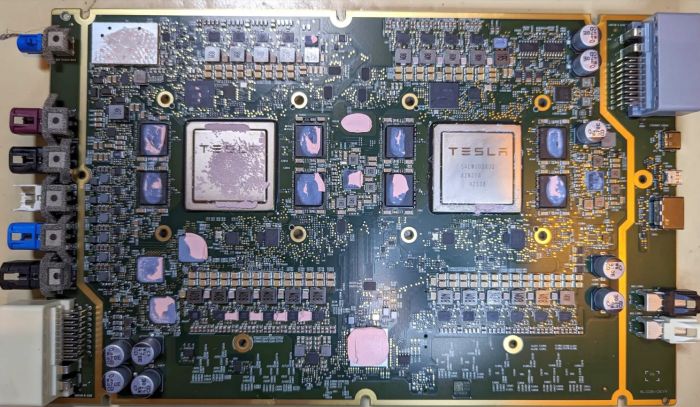
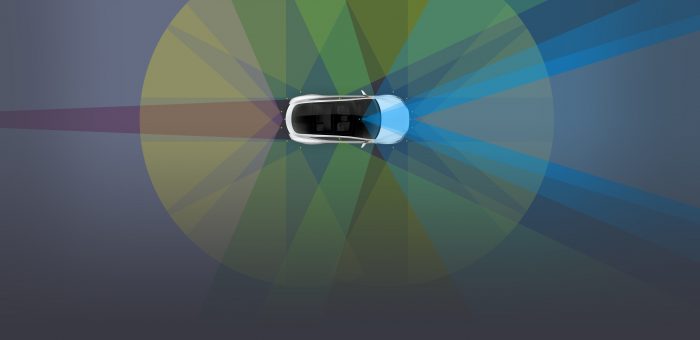
Tesla relies on exterior cameras, its own in-car AI computer, neural-network software and a cabin camera for driver monitoring. The company dropped radar and ultrasonic sensors from new cars when it moved to Tesla Vision, and current vehicles ship with Hardware 4, the successor to the Full Self-Driving Computer introduced in 2019. Hardware varies by vehicle generation.
Core Features:
- Adaptive speed control with full stop-and-go
- Sustained steering (Autosteer)
- City-street and highway route following with FSD (Supervised)
- Turns, intersections and traffic-light handling
- Highway entry and exit
- Automatic lane changes
- Camera-based driver monitoring
- Frequent over-the-air software updates (see our running list of Autopilot updates)
Verdict:
Tesla FSD (Supervised) is the most ambitious consumer Autopilot system in this comparison in the variety of roads and maneuvers it attempts. That breadth is exactly why supervision matters so much. Judge it as a powerful supervised driving system, not as a driverless car.
Rivian
Overview:
Rivian has made autonomy a central part of its software strategy. The system has grown well past the highway-only Driver+ of the first-generation trucks: on supported vehicles and roads it now offers Universal Hands-Free driving, and Rivian writes its own autonomy software rather than buying a supplier’s stack.
What It’s Called:
Rivian Autonomy+ is the paid tier, and Universal Hands-Free is its headline feature. Rivian also uses the names Co-steer and Lane Change on Command for individual functions. Older Driver+ terminology applies to first-generation vehicles only.
Supported Models:
Gen 2 R1T and R1S (2025 model year onward) are the main current vehicles. R2 deliveries began in August 2026, and the R2 Launch Package includes Autonomy+ for the life of the vehicle. Verify the package and software on the exact vehicle before buying. Autonomy+ costs $49.99 a month or $2,500 one time, with a 60-day trial on new deliveries.
Where It Works / Driver Requirements:
Rivian says Universal Hands-Free covers 3.5 million miles of roads in the U.S. and Canada, and it needs clearly marked lanes. The driver must stay attentive, and the system will not stop or slow for traffic lights or stop signs. That limit matters when you compare Rivian’s broad road coverage with Tesla’s.
Technology Used:
Every Gen 2 vehicle carries 11 exterior cameras, five radars, 12 ultrasonic sensors and a driver-facing camera in the rearview mirror, with far more onboard computing than Gen 1. Rivian develops its own autonomy software and trains it on fleet data.
Core Features:
- Adaptive cruise with stop-and-go
- Lane centering
- Hands-free driving on supported roads
- Lane Change on Command
- Camera-based driver monitoring
- Over-the-air updates
Verdict:
Rivian has moved quickly from a conservative highway assistant to a much broader Autopilot platform, and it is one of the more interesting systems to watch. Broad road availability still does not mean the truck handles traffic lights, stop signs or every road situation; the driver does.
General Motors
Overview:
GM Super Cruise is one of the most established hands-free Autopilot systems in the U.S. It launched on the Cadillac CT6 in 2017 and is now offered on more than 20 Cadillac, Chevrolet, GMC and Buick models, from the Bolt to the Escalade. GM passed one billion hands-free Super Cruise miles in April 2026. In December 2024 GM stopped funding Cruise’s robotaxi development and folded the Cruise team into its driver-assistance work on personal vehicles, so Super Cruise is now the whole story for GM buyers.
What It’s Called:
Super Cruise. Read our detailed Super Cruise review.
Supported Models:
More than 20 equipped GM vehicles across Cadillac, Chevrolet, GMC and Buick. Rather than rely on a static list, check GM’s current compatibility information for the model year you are shopping. Three years of Super Cruise are included with an equipped vehicle; after that it is a subscription from $39.99 a month.
Where It Works / Driver Requirements:
Super Cruise drives hands-free on compatible mapped roads while an infrared camera on the steering column checks that you keep watching the road. Coverage has expanded far beyond the original interstate-only network, and newer versions add hands-free trailering on some trucks and SUVs. GM has said it plans an eyes-off version in 2028, starting on the Cadillac ESCALADE IQ, but that is a future feature, not one you can buy today.
Technology Used:
Super Cruise combines cameras, radar, precise GPS positioning, lidar-scanned map data, driver monitoring and GM’s own integration software. Specific hardware varies by generation.
Core Features:
- Hands-free lane centering on mapped roads
- Adaptive cruise control with stop-and-go
- Infrared driver-attention monitoring
- Automatic and on-demand lane changes on supported versions
- Large and growing mapped-road network
- Hands-free trailering on some vehicles
Verdict:
For drivers whose priority is relaxed hands-free highway travel with clear operating boundaries, Super Cruise remains one of the strongest Autopilot options. Its tradeoff against Tesla is a narrower operating scope, but that restriction also makes the system’s intended use easy to understand, which is part of why it does so well in driver-monitoring evaluations.
VW / Audi / Porsche
Overview:
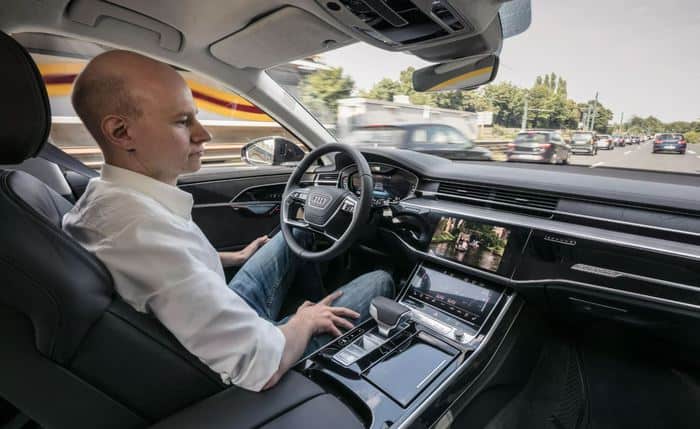
Volkswagen Group brands offer capable adaptive cruise and lane-centering assistance, but the features and names differ between Volkswagen, Audi and Porsche, and none of the three sells a hands-free system in the U.S. today. Audi’s Level 3 Traffic Jam Pilot, announced for the A8 years ago, never reached U.S. customers, so the systems U.S. buyers can actually use are conventional hands-on Level 2.
What It’s Called:
- Volkswagen: Travel Assist, part of the IQ.DRIVE suite, which pairs adaptive cruise control with Lane Assist and works from a standstill up to 95 mph with both hands on the wheel.
- Audi: adaptive cruise assist with lane guidance (standard on the 2026 A3 Premium Plus) and adaptive cruise assist plus on models such as the A6, with related driver-assistance packages on the S3, S5 and Q5.
- Porsche: Adaptive Cruise Control, with Active Lane Keeping and Porsche InnoDrive sold as one-time purchases through the Porsche Connect Store on models such as the Taycan.
Supported Models:
Availability varies by model and trim across all three brands, so check the specific car rather than assuming a group-wide feature set.
Where It Works / Driver Requirements:
These systems provide supervised steering and speed assistance on roads with clear lane markings. Hands stay on the wheel, and the car warns and eventually cancels if it stops detecting them.
Technology Used:
Volkswagen Group works with a range of suppliers and is expanding its use of Mobileye technology: in 2024 it chose Mobileye’s SuperVision and Chauffeur platforms for future Audi, Bentley, Lamborghini and Porsche models, and in March 2025 it announced a Mobileye Surround ADAS program with Valeo that will bring hands-free highway driving to future MQB-platform Volkswagens. Current hardware varies by platform and brand.
Core Features:
- Adaptive cruise with stop-and-go
- Lane centering or active lane guidance
- Traffic-jam assistance at low speeds
- Model-specific lane-change and predictive speed functions (Porsche InnoDrive uses map data to manage speed for curves and speed limits)
Verdict:
Volkswagen Group offers useful Autopilot assistance, but buyers need to check the exact model and package, and nobody should choose one of these cars expecting hands-free driving. The more interesting Volkswagen story is the Mobileye-based hands-free system that has been announced for future vehicles.
BMW
Overview:
BMW has moved well beyond the low-speed Traffic Jam Assistant of a few years ago. Its current Highway Assistant drives hands-free at normal highway speeds on supported roads, which puts BMW in the same group as GM and Ford rather than the hands-on crowd.
What It’s Called:
Highway Assistant, sold within the Driving Assistance Professional Package. BMW’s reference guide still lists the older Traffic Jam Assistant, which allows hands-free driving only below 40 mph, so confirm which one a given car has.
Supported Models:
BMW’s U.S. site lists Highway Assistant with Active Lane Change on models including the 5 Series, 7 Series, i7 and X5. Availability depends on the model year and equipment, so verify Highway Assistant specifically rather than assuming every car with the Professional package has it. It is not offered in Alaska, Hawaii, Guam or Puerto Rico.
Where It Works / Driver Requirements:
BMW says Highway Assistant allows hands-free driving on suitable controlled-access highways in the U.S. at up to 85 mph, subject to conditions and posted limits. An attention camera watches the driver, who must keep watching the road.
Technology Used:
BMW combines cameras, radar, driver monitoring, map data and onboard computing. For the Neue Klasse generation, starting with the iX3 that launched in November 2025, BMW uses the Snapdragon Ride Pilot platform it developed jointly with Qualcomm.
Core Features:
- Hands-free highway driving up to 85 mph
- Adaptive cruise with stop-and-go
- Lane centering
- Camera-based driver monitoring
- Active Lane Change, including lane changes confirmed with a glance at the side mirror
Verdict:
BMW Highway Assistant is a serious hands-free Autopilot competitor, not the low-speed traffic feature BMW offered before. It is the option to look at if you want hands-free driving at normal highway speeds without moving to a Tesla or a GM vehicle.
Ford / Lincoln
Overview:
BlueCruise is Ford’s mature hands-free highway system, and by Ford’s own count it is one of the most widely used: hands-free miles rose 88 percent in 2025, more than 500,000 BlueCruise-equipped vehicles were added that year, and the fleet has passed 600 million hands-free miles. Ford Co-Pilot360 remains the umbrella name for the broader safety and driver-assistance features, but BlueCruise is the system that matters for this comparison.
What It’s Called:
BlueCruise. The current version is BlueCruise 1.5.
Supported Models:
Ford lists the Mustang Mach-E, F-150, F-150 Lightning, Explorer and Expedition, and Lincoln offers it on the Navigator, Aviator, Nautilus and Corsair Hybrid. BlueCruise costs $49.99 a month, $495 a year, or $2,495 one time when bought with the vehicle, after a three-month trial. The software version on the specific vehicle matters as much as the badge.
Where It Works / Driver Requirements:
BlueCruise drives hands-free in Blue Zones, more than 130,000 miles of divided highways in North America, while a driver-facing camera tracks your eye gaze and head position.
Technology Used:
Ford combines cameras, radar, driver monitoring, map data and its own software integration. Ford has also worked closely with Mobileye on its driver-assistance sensing.
Core Features:
- Hands-free lane centering in Blue Zones
- Adaptive cruise with stop-and-go
- Camera-based driver monitoring
- Lane Change Assist and In-Lane Repositioning
- Automatic Lane Change without a turn-signal command on BlueCruise 1.5
Verdict:
BlueCruise is one of the mainstream hands-free systems shoppers should seriously consider, and it is available on more affordable vehicles than most of its competitors. Because its capabilities now depend on the software version, verify the version installed on the exact vehicle rather than relying on the BlueCruise name alone.
Hyundai / Kia / Genesis
Overview:
Hyundai Motor Group offers some of the strongest hands-on highway assistance in mainstream cars. Genesis belongs in the same section because it shares the technology, but it targets a different buyer and often gets the more advanced implementation first. None of the three brands offers a hands-free system in the U.S.
What It’s Called:
Lane Following Assist and Smart Cruise Control with Stop and Go are the building blocks. Highway Driving Assist (HDA) combines them and adds speed-limit awareness, and Highway Driving Assist 2 (HDA 2) adds lane-change assistance and smoother following behavior.
Supported Models:
HDA 2 appears on the Hyundai IONIQ 5 and IONIQ 6, the Kia EV6, EV9 and Telluride (SX trim and up), and the Genesis G90 and GV80, with availability by trim. Many other models, including the current GV70, list only the first-generation HDA. Check the trim sheet for “HDA 2” rather than the model name.
Where It Works / Driver Requirements:
HDA and HDA 2 are supervised systems meant for highways. Your hands stay on the wheel; the car warns and cancels if they stay off.
Technology Used:
The systems combine a forward camera, radar, navigation map data and the group’s own control software. Hyundai does not publish which supplier’s chips a given model uses.
Core Features:
- Adaptive cruise with stop-and-go
- Lane centering
- Speed-limit and highway map integration
- Turn-signal-initiated lane changes on HDA 2
- Hands-on detection and attention warnings
Verdict:
Hyundai, Kia and Genesis remain strong choices for buyers who want capable lane centering and adaptive cruise without paying for a hands-free system. HDA 2 is the version to look for when comparing the more advanced implementations.
Volvo
Overview:
Volvo was one of the first companies to bring lane centering to its whole lineup, and Pilot Assist remains a useful supervised steering and adaptive-cruise system. What has changed is under the hood: Volvo’s newest cars run on centralized NVIDIA computers, but the driver-facing feature set is still conventional hands-on Level 2.
What It’s Called:
Pilot Assist.
Supported Models:
Volvo’s U.S. site lists Pilot Assist for the EX30, EX40, XC40, XC60, EX60, V60 Cross Country, XC90 and EX90, including the plug-in hybrids.
Where It Works / Driver Requirements:
Pilot Assist provides steering guidance and speed management on roads with clear markings. Volvo requires hands on the wheel, and the driver is always in control.
Technology Used:
The EX90 runs on NVIDIA DRIVE Orin and the ES90 on two DRIVE AGX Orin computers, with Volvo planning a move to DRIVE Thor. The EX90 launched with a roof-mounted Luminar lidar, but Volvo has documented that some 2026 model-year EX90 and ES90 cars are built without it because of limited lidar supply and customer demand, and it says the safety and driver-support features work either way. So do not assume every EX90 has lidar, and do not expect the sensor to change what Pilot Assist does today.
Core Features:
- Adaptive cruise with stop-and-go
- Lane-centering assistance
- Speed management
- Hands-on driver supervision
- Model-specific safety and driver-assistance functions
Verdict:
Treat Pilot Assist as a conventional supervised Autopilot system rather than a hands-free or autonomous one. Volvo’s computing platform is capable, but the sensor hardware alone does not tell you what the car can do, and what it can do today is hands-on lane centering.
Mercedes-Benz
Overview:
Mercedes-Benz is two different stories: the ordinary Level 2 driver-assistance features found across the lineup, and DRIVE PILOT, the only Level 3 system a U.S. consumer can buy. Mercedes helped pioneer adaptive cruise control in the late 1990s with the S-Class, and it still ties map data into the driving system, slowing the car for bends before you reach them.
What It’s Called:
The Level 2 features go by names such as Active Distance Assist DISTRONIC, Active Steering Assist, Active Lane Change Assist and Automatic Lane Change Assist, usually bundled in a driver-assistance package. DRIVE PILOT is the Level 3 system.
Level 2 System:
Equipped Mercedes models offer adaptive cruise with stop-and-go, steering assistance, lane-change assistance and related functions. All of it requires continuous driver supervision and hands on the wheel.
DRIVE PILOT Level 3:
DRIVE PILOT is fundamentally different from every Level 2 system in this article because it takes responsibility for the driving task while its conditions are met. In the U.S. those conditions are narrow: major freeways in California and parts of Nevada, at 40 mph or less, in moderate to heavy traffic, in daytime and clear weather, with clear lane markings and no construction zones. When the system asks you to take over, you have about ten seconds before it brings the car to a stop. It is exclusive to the S-Class and EQS Sedan, from the 2024 model year onward, and is sold as a subscription. Read the Mercedes-Benz DRIVE PILOT press release for the certification history.
Technology Used:
DRIVE PILOT adds a broader sensor set than ordinary Level 2 assistance, including lidar alongside radar, ultrasonic sensors and cameras, plus a driver camera and redundant steering and braking systems. For its newer vehicles, starting with the CLA, Mercedes runs NVIDIA’s DRIVE AV software on NVIDIA computers.
Core Features:
- Level 2 adaptive cruise and steering assistance on equipped models
- Map-based speed adjustment for curves
- Active and automatic lane-change assistance on supported packages
- DRIVE PILOT Level 3 operation under its narrow conditions
- Driver takeover request with a timed handover
- Redundant sensing and control architecture for DRIVE PILOT
Verdict:
Mercedes-Benz is the clearest example of why the SAE level and the size of the operating area are separate questions. DRIVE PILOT delivers a true Level 3 experience, but only in a far narrower set of situations than Tesla FSD (Supervised), Super Cruise or BlueCruise can operate as Level 2 systems. The everyday Level 2 features are good, but not a reason to choose a Mercedes over the hands-free systems above.
Nissan / Infiniti
Overview:
Nissan’s advanced ProPILOT is no longer a Japan-only story. ProPILOT Assist 2.1 brings hands-free highway driving to current U.S. Nissan and Infiniti vehicles, while the original ProPILOT Assist continues as a hands-on system on lower trims and older models such as the Rogue and LEAF.
What It’s Called:
ProPILOT Assist (hands-on) and ProPILOT Assist 2.1 (hands-free in the lane).
Supported Models:
ProPILOT Assist 2.1 is available on select trims of the 2026 Nissan Armada and Murano, and on the Infiniti QX80 in SPORT and AUTOGRAPH trims. It needs an active NissanConnect or Infiniti InTouch services package, which comes with a trial and then a monthly fee. Verify the exact trim and package.
Where It Works / Driver Requirements:
ProPILOT Assist 2.1 allows hands-off driving in a single lane on mapped, controlled-access divided highways in the lower 48 states while the driver keeps watching the road. Lane changes and passing maneuvers require both hands back on the wheel, so the experience is hands-free only for cruising, not for every maneuver.
Technology Used:
The system combines cameras, radar, high-definition map data and driver monitoring. Nissan does not publish which supplier’s chips a given model uses, so we no longer describe every Nissan and Infiniti as a Mobileye EyeQ system.
Core Features:
- Adaptive cruise with stop-and-go
- Lane centering
- Hands-free single-lane highway driving on ProPILOT Assist 2.1
- Lane Change Assist and Passing Assist (hands on the wheel)
- Driver monitoring
Verdict:
ProPILOT Assist 2.1 moves Nissan and Infiniti into the modern hands-free highway group. The key is to distinguish it from the original ProPILOT Assist, which is a far more basic hands-on system, and to confirm which one the trim you are looking at actually has.
Other Manufacturers of Note
Toyota / Lexus
Overview:
Toyota Safety Sense has moved on from the TSS 2.0 generation that first appeared on the 2020 RAV4 and Corolla. The 2026 RAV4 ships with Toyota Safety Sense 4.0 standard on every trim, and selected Toyota and Lexus models now offer a limited hands-free mode for low-speed traffic.
What It’s Called:
Toyota Safety Sense (the generation varies by vehicle), with Lane Tracing Assist for lane centering, Dynamic Radar Cruise Control for adaptive cruise and Traffic Jam Assist on selected models. Lexus calls its suite Lexus Safety System+, currently version 3.0 on models such as the TX, GX, LS and RX, with 4.0 arriving on the new ES.
Supported Models:
Traffic Jam Assist is offered on the Lexus TX, LS, GX and RX and on Toyota models including the Crown Signia Limited, bZ4X Limited, Prius Plug-in and the 2026 RAV4. It requires an active Drive Connect subscription.
Where It Works / Driver Requirements:
Lane Tracing Assist is a supervised, hands-on lane-centering feature. Traffic Jam Assist allows hands-free steering in congested traffic below 25 mph on controlled-access highways, with a driver camera confirming your eyes are on the road. It is not a general high-speed hands-free system.
Core Features:
- Adaptive cruise with stop-and-go
- Lane Tracing Assist lane centering
- Traffic-sign and collision-avoidance functions
- Low-speed hands-free Traffic Jam Assist on supported vehicles
Verdict:
Toyota and Lexus now offer more capable Autopilot features than their reputation suggests, but the exact Safety Sense generation and whether the car includes Traffic Jam Assist make a large difference. Check both before assuming two Toyotas drive alike.
Honda / Acura
Overview:
Honda Sensing and AcuraWatch provide adaptive cruise, lane-keeping and other safety features across most of both lineups. Selected models add a Traffic Jam Assist function, but Honda’s version is a hands-on system: it works from 0 to 45 mph and cancels if you take your hands off the wheel, so do not confuse it with the hands-free Traffic Jam Assist on Toyota and Lexus models.
Acura ZDX Exception:
Used-car buyers should know that the 2024 Acura ZDX Type S offered Hands Free Cruise as part of AcuraWatch 360+, covering roughly 400,000 miles of mapped roads. It came from the ZDX’s GM-built platform, and Acura ended ZDX production in September 2025, so treat it as a one-vehicle exception rather than a general Acura capability.
Verdict:
Honda and Acura offer useful conventional Autopilot assistance, but nearly every current system belongs in the hands-on category rather than alongside Super Cruise or BlueCruise.
Subaru
Overview:
Subaru’s EyeSight Driver Assist Technology has combined camera-based safety functions with adaptive cruise and lane centering for years. For 2026 Subaru joins the hands-free highway category on the top Outback trims, which is a bigger step than anything EyeSight has offered before.
What It’s Called:
EyeSight for the standard suite, and Highway Hands-Free Assist (Subaru’s own pages shorten it to Hands-Free Assist) on supported Outback trims.
Supported Models:
Highway Hands-Free Assist is standard on the 2026 Outback Touring and Touring XT. Cars sold after January 19, 2026 have it active from delivery; earlier 2026 Touring models get it through a free dealer update.
Where It Works / Driver Requirements:
It works on interstates with two or more lanes in each direction at up to 85 mph, and Subaru’s DriverFocus camera disengages the system if you stop paying attention. The feature itself is not a subscription, but map updates need a MySubaru Companion plan. It also adds Pre-Curve Speed Control, Active Lane Change Assist and Automatic Resume Assist.
Technology Used:
EyeSight is built around Subaru’s forward-facing stereo camera system, with additional sensors and control hardware varying by generation. Its camera-first design used to be a reason to rank it below camera-plus-radar competitors; the Outback’s hands-free capability shows that conclusion was too simple.
Verdict:
Subaru matters more to this comparison in 2026 than it ever has. The Outback’s Highway Hands-Free Assist deserves to be judged separately from conventional EyeSight, and it makes the Touring trims worth a look for anyone comparing mainstream hands-free options.
Lucid
Overview:
Lucid belongs in a current Autopilot comparison because its DreamDrive systems now include hands-free highway driving. Lucid added Hands-Free Drive Assist and Hands-Free Lane Change Assist to the Air by software update in July 2025, and the Gravity got the same features in June 2026 with the UX 3.6 update, which also added automatic lane changes.
What It’s Called:
DreamDrive Pro on the Lucid Air and DreamDrive 2 Pro on the Lucid Gravity. The Gravity’s Pro package carries 34 sensors including lidar, versus 23 on the base DreamDrive 2 Premium.
Supported Models:
Appropriately equipped Lucid Air and Gravity vehicles. The DreamDrive Pro hardware has to be on the car from the factory; do not assume an Air without it can be upgraded later.
Where It Works / Driver Requirements:
Hands-free assistance is for supported highway conditions while the driver keeps watching the road, with driver monitoring enforcing that.
Core Features:
- Adaptive cruise with stop-and-go
- Lane centering
- Hands-free highway driving
- Hands-free and automatic lane changes
- Driver monitoring
- Over-the-air feature additions
Verdict:
Lucid is a legitimate premium hands-free Autopilot alternative and one of the few automakers other than Tesla and Rivian that keeps adding driving features to cars already on the road.
Jeep / Ram
Overview:
Stellantis now offers a hands-free Autopilot option on selected Jeep and Ram vehicles, which puts hands-free driving into full-size SUVs and pickups from a brand that had none a few years ago.
What It’s Called:
Hands-Free Active Driving Assist. Do not confuse it with plain Active Driving Assist, the hands-on system on many other Stellantis models, including the Dodge Charger.
Supported Models:
New for the 2026 Jeep Grand Cherokee as an option; standard on the Ram 1500 Tungsten and available on the RHO, Laramie, Limited and Limited Longhorn; also offered on the Jeep Wagoneer S. Check the trim, because the hands-free version is not standard across the lineup.
Where It Works / Driver Requirements:
Hands-free operation is limited to mapped limited-access divided highways, more than 200,000 miles of them, at up to 90 mph, with driver-attention monitoring. Ram says the system will not engage if it detects a trailer is connected, so truck buyers who tow should plan on hands-on driving while towing.
Core Features:
- Adaptive cruise with stop-and-go
- Lane centering
- Hands-free driving on mapped divided highways
- Driver-attention monitoring
Verdict:
Jeep and Ram earn a place here because hands-free driving is no longer limited to EVs and luxury sedans. For buyers comparing full-size SUVs and pickups against a Super Cruise-equipped GM truck, it is now a real alternative, with the towing restriction as the main caveat.
Comma.ai: DIY Autopilot
For drivers who already own a compatible car, comma.ai offers an aftermarket alternative to a factory Autopilot system. The current hardware is comma four, priced at $999 (or $699 with a trade-in of any older comma device), running the open-source openpilot software. The earlier comma 3X is no longer sold.
openpilot provides supervised lane centering and adaptive cruise on more than 325 car models from 27 brands, depending on model year and factory equipment, and it uses its own driver-monitoring camera to make sure you stay attentive. Compatibility is everything: check the exact vehicle on comma’s list before buying the hardware.
comma does not turn a car into a self-driving vehicle, and because the hardware and software are aftermarket additions, judge it differently from a factory-supported system. Our comma.ai openpilot guide goes into the details, including how it compares with Tesla Autopilot.
Which Cars Have the Best Autopilot Features in 2026?
There is no longer one obvious winner, because the major Autopilot systems are solving different problems.
Tesla FSD (Supervised) stands out for breadth. It assists with far more than highway lane centering: city streets, turns, intersections, freeway transitions and route following. It remains a supervised system, and the driver must be ready to intervene at any moment.
For drivers who mainly want hands-free highway driving, GM Super Cruise, Ford BlueCruise and BMW Highway Assistant are the strongest systems to consider. They deliberately limit where hands-free operation is available and use driver-monitoring cameras to make sure you keep watching the road.
Rivian is the fastest-moving alternative as it expands Universal Hands-Free across a much larger road network, although the driver still handles traffic lights, stop signs and other situations the system does not cover.
Nissan ProPILOT Assist 2.1, Lucid DreamDrive, Jeep and Ram Hands-Free Active Driving Assist, and Subaru Hands-Free Assist add more legitimate choices to the hands-free category than existed only a few years ago.
Hyundai, Kia, Genesis, Toyota, Lexus, Volvo, Volkswagen, Audi, Porsche, Honda and Acura offer useful hands-on Autopilot assistance as well, but the exact experience varies widely by model and package.
Mercedes-Benz DRIVE PILOT is in a category of its own. Under tightly limited conditions, it provides Level 3 driving, where the system rather than the driver performs the driving task. The tradeoff is an operating area far narrower than any of the Level 2 systems above.
So the best Autopilot system depends on what you want it to do. If city-street assistance matters, Tesla is the system to evaluate. If hands-free highway driving is the priority, compare Super Cruise, BlueCruise, BMW Highway Assistant, Rivian, Nissan and the other hands-free systems on the roads you actually drive.
Before buying, have the dealer or seller demonstrate the exact vehicle. Confirm the installed hardware, the software version, the road coverage, the subscription terms, and what the system expects from you as the driver. If you are not sure, YouTube is full of owner and professional tests of every system in this article.
Interested in a Tesla?
If you’re considering a Tesla for Autopilot or FSD (Supervised), check the current Tesla referral offers before ordering. Tesla changes the referral benefits periodically, so confirm the terms at the time of purchase.
Check Current Tesla Referral Offers
Learn More
- Tesla Autopilot and FSD features
- Current Tesla referral program
- Tesla Full Self-Driving background
- Tesla Autonomy Day archive
- GM Super Cruise review
- DIY Autopilot using comma.ai openpilot
Get the Latest Videos
Subscribe to AutoPilot Review on YouTube
Manufacturers & OEMs
If you’re a manufacturer or OEM and you’d like us to evaluate your vehicle, technology or just want to provide additional information, feel free to contact us directly.